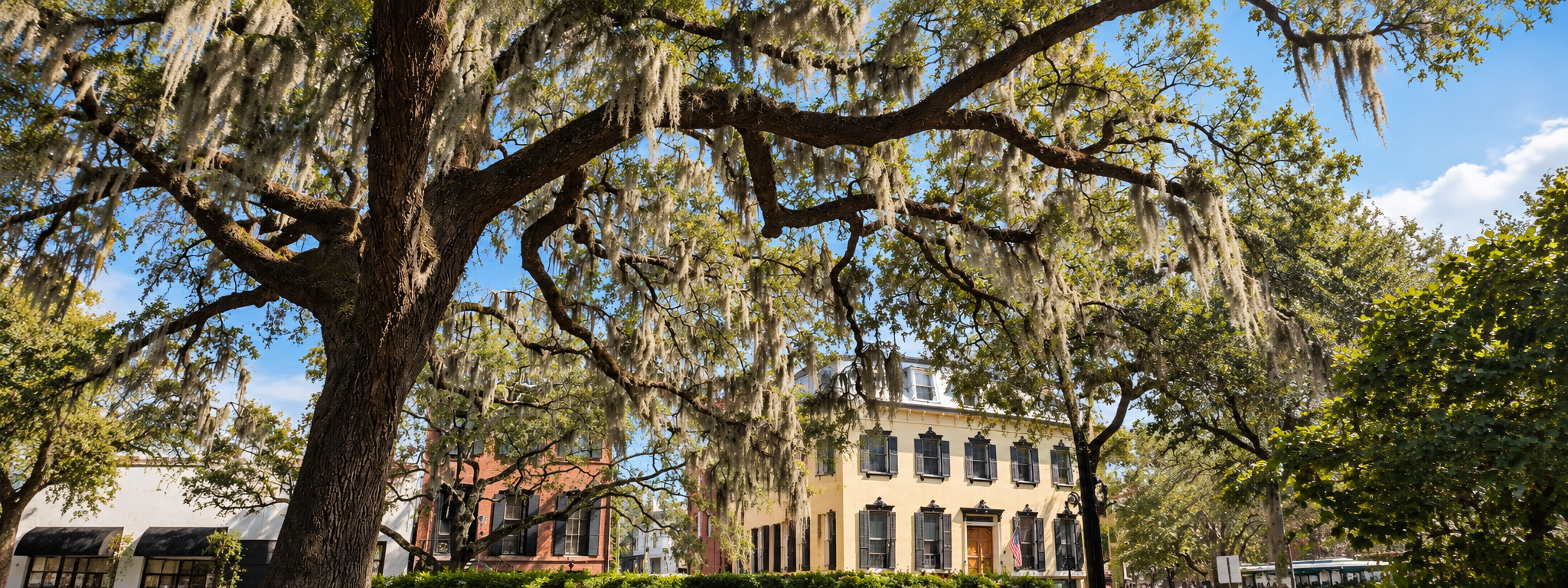
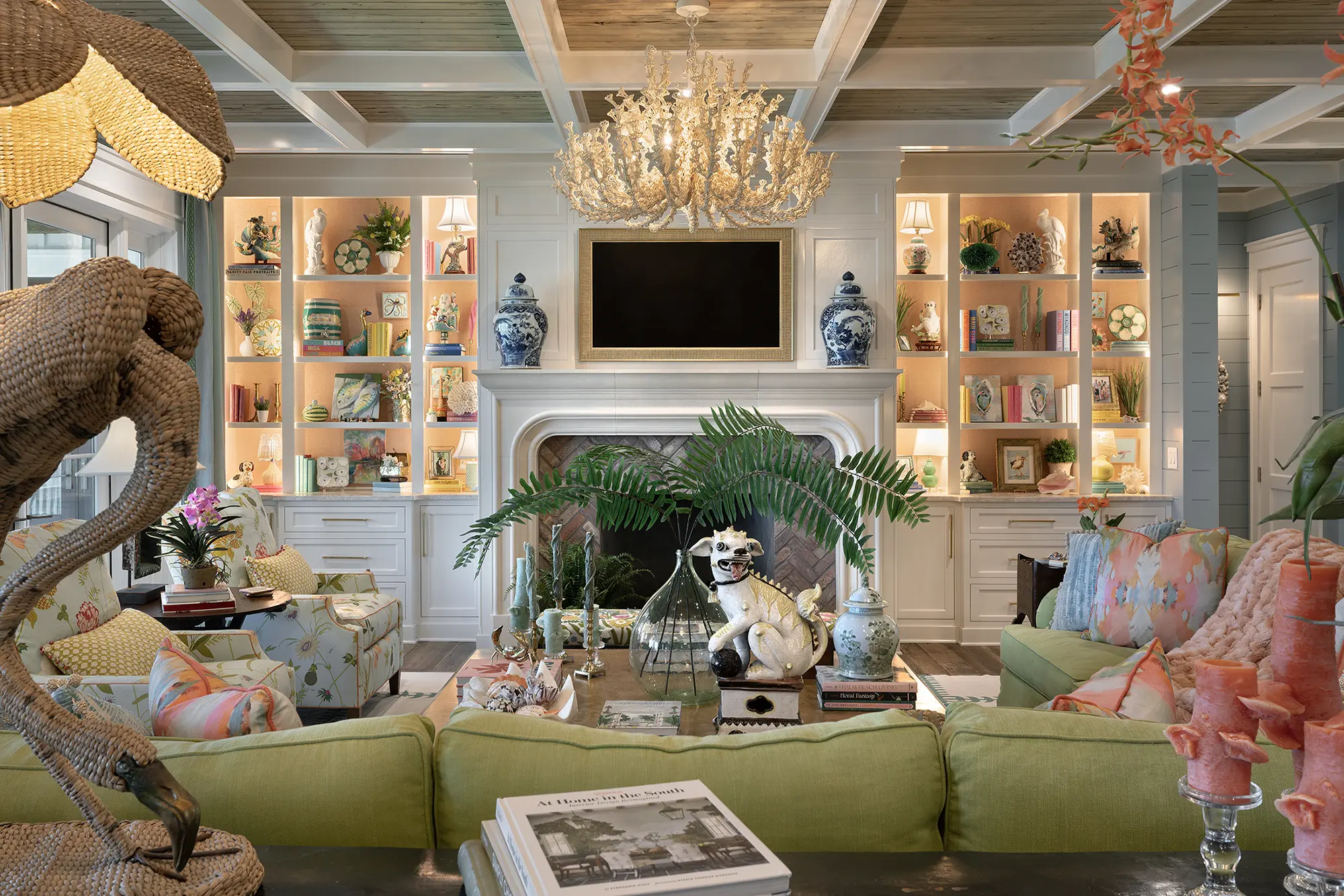
Southern design, at its core, has never had a fixed palette. Rather, it’s a mindset: hospitality meets character, layered collections built over time, antiques paying homage to our favorite people and things. A house that’s meant to be experienced, that carries a story with it. It’s why Southern coastal style holds up as a real regional tradition instead of a trend, and why that mindset can wear a hundred different palettes. This DeBordieu home just outside Georgetown, South Carolina, is the case in point: Palm Beach-style interior design in a Lowcountry home, with its bold color scheme so carefully fused with traditional Southern elegance.
Meet the Designer: Lance Griffith and CHD Interiors
Before diving deep into the details of this quintessential Southern masterpiece, it’s of value to know more about the designers behind it. The home was designed by CHD Interiors, a Lowcountry design firm founded in Murrells Inlet, South Carolina. Nearly five decades later, the firm has grown into a team of designers and stylists working out of two showrooms — Murrells Inlet and Mount Pleasant — serving clients across South Carolina and North Carolina and all of the Eastern seaboard.
Lance Griffith, CHD Interiors’ owner and lead designer, grew up around the business — his mother ran a drapery workroom attached to their home in her twenties that evolved into the business it is today. He’s described his approach as “problem-solving in an aesthetic manner,” favoring interiors that feel naturally evolved rather than overly composed, which speaks to the instinct behind this home’s mix of bold color and inherited antiques, and the philosophy behind CHD’s signature “Lowcountry Chic” style: relaxed, coastal, and comfortable enough for a family that’s rarely home long enough to be precious about it.
From a Mountain Retreat to Coastal Southern Statement Home
The family behind this project spent years in the mountains of Cashiers, North Carolina, before relocating to DeBordieu Colony in South Carolina, a quiet, marsh-and-beach enclave along the Lowcountry coast. Rather than replicate what they’d built up in the mountains, the move became an opportunity to try a completely different aesthetic in a completely different setting.
That instinct to match the house to its place isn’t new for this family. This DeBordieu home is actually one of three CHD Interiors has worked on together with them: a historic residence in Charleston and a western-style home in Montana round out the collection, each one built to feel native to its location and unique to the spirit of the land.
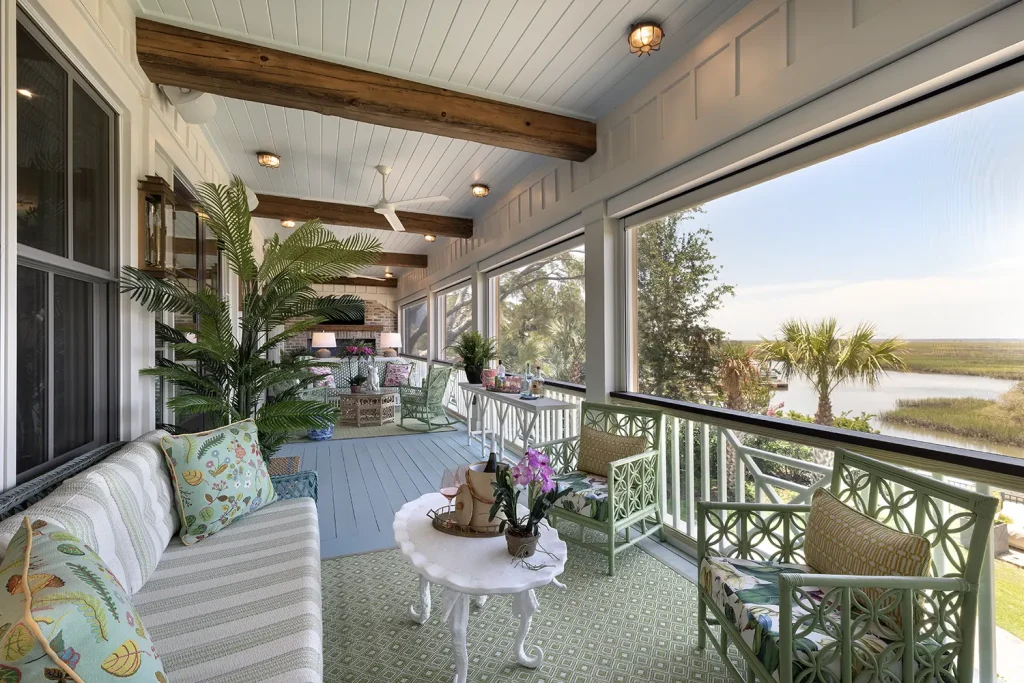
Unlike the historic character of the Charleston home or the western ranch materials of their Montana home, this project needed its own coastal identity. What it landed on was a full embrace of Palm Beach style meets Southern tradition.
The Vision: Palm Beach Style Meets the Lowcountry
Classic Palm Beach interior design leans on saturated color, bold pattern mixing, tropical and floral motifs, and a confident, slightly retro glamour — think 1950s resort furniture, rattan, and citrus-bright accents. It’s the opposite of quiet, and that was exactly the point here. The homeowner walked in with a clear point of view already formed: color, pattern, and florals, a deliberate departure from the more muted mountain-house palette she was leaving behind.
What made the project sing wasn’t just a strong client vision, but rather it was the collaboration behind it. She brought her own fabrics, products, and sourced fixtures to the table, plus genuinely great taste and the confidence to commit to it. At the same time, she was open to the CHD Interiors team’s ideas throughout, which made the process a true partnership. As Griffith put it, “it was just a great collaboration to make the whole thing come together.”
The Palette & Materials: A Color-Drenched Southern Home
If 2026 has a defining interior trend, it’s the death of the safe, all-white room. Color drenching — saturating walls, trim, and ceilings in a single bold hue — has become one of the biggest design movements of the year, and Homes & Gardens’ 2026 trend report points to the same shift. Personality and pattern are back, and quiet luxury is losing ground to homes with real character.
Color was never really foreign down here anyway. Haint blue porch ceilings have been standard issue on Southern houses for generations. Fine Southern historic interiors were brightly colored to give them life in the candleglow of the evenings. What’s changed is the willingness to carry that nerve indoors and run it wall to wall. This DeBordieu home was ahead of that curve.
The client-led palette reads like a color wheel come to life: flamingo pink, coral, bright mint green, warm yellows, and blues — “every color you can imagine,” as Griffith described it. Rather than applying one palette across the whole house, each room got its own identity.
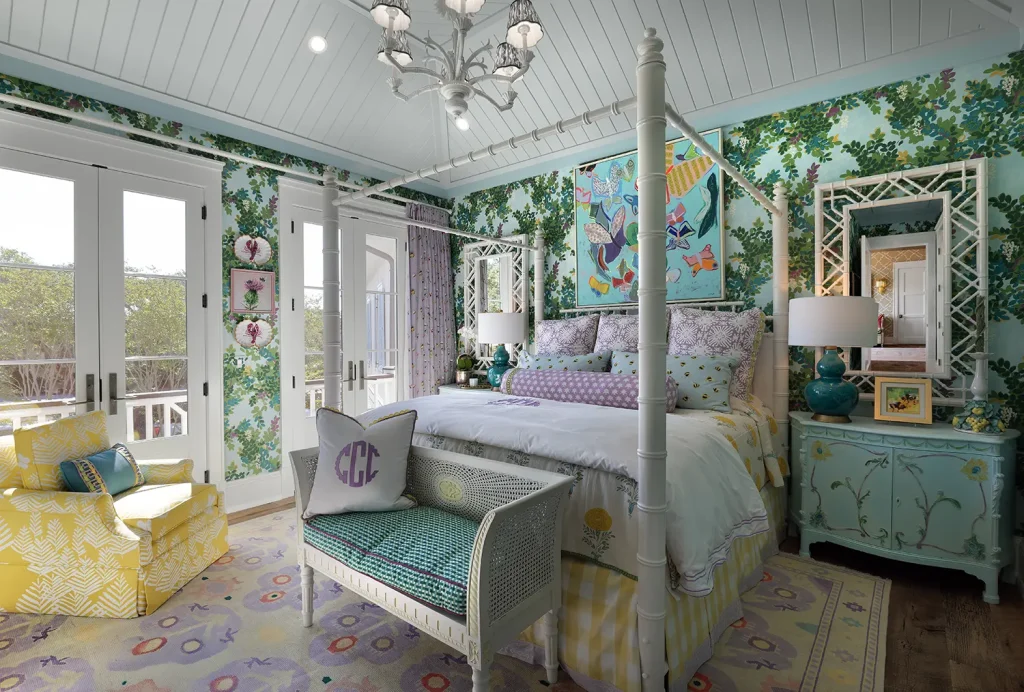
This room-by-room approach lent curation to the entire project. Each space was its own composition, but the thread of presentation and saturation tied them together flawlessly. Layered on top of the palette are fixtures the homeowner sourced from vendors abroad — a detail that adds a well-traveled texture fitting for a family that spends as much time out of the country as they do at home.
Room Spotlight: A Kitchen That Earns Its Color
If one room defines this project, it’s the kitchen. It’s the room Griffith calls the most interesting in the house, yet also the most approachable. The custom cabinetry alone tells the story: salmon, light blue, and light green cabinet fronts, paired with distinctive lighting and brass countertops that had to work as hard as the color did.
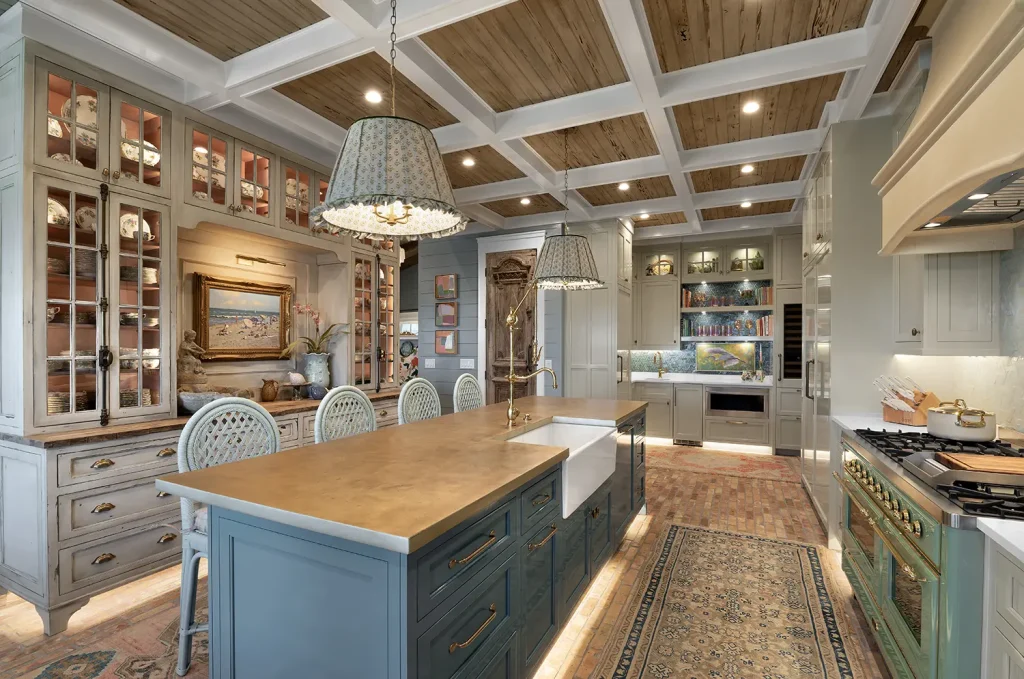
Grounding all of that is an earthy Moroccan tile backsplash, a pattern choice that’s having a real moment in 2026 kitchen design for exactly this reason: it adds texture and pattern without competing with color-forward cabinetry. That’s the “why it works” detail most rooms like this miss. Multi-color cabinetry could easily read as scattered, but the earthy, patterned tile acts as a visual anchor — it’s the design equivalent of a bass note, letting the brighter colors sing without the room losing its footing.
Old Meets New: Antiques in a Palm Beach Palette
Bright, saturated color needs a counterweight, and this home found it in antiques. Some of these antiques were already owned by the homeowner, and some the CHD Interiors team sourced to round out the collection. Designer Bunny Williams has long argued that antiques are what keep a room from feeling flat or overly trendy, and that principle is doing real work here: the aged wood and time-worn patina soften the brightness and make the boldest rooms feel accessible instead of overwhelming.
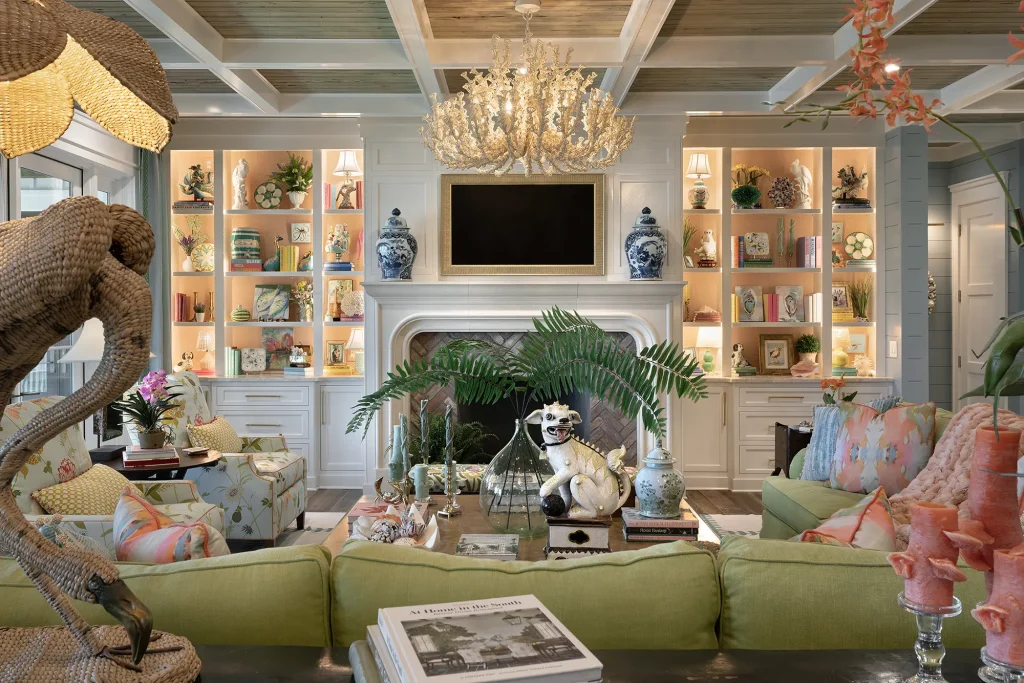
The result is a genuinely eclectic mix — a “multi-layered antique vibe,” in Griffith’s words, set against contemporary 1950s-style Palm Beach furniture. It’s one of the more eclectic projects CHD Interiors has taken on, and that eclecticism is why it reads as collected rather than themed. A house that’s all-new can feel like a showroom; a house that mixes eras feels lived-in; the most Southern quality a home can have, regardless of palette.
Favorite Details: The Foyer and the Moody Bar
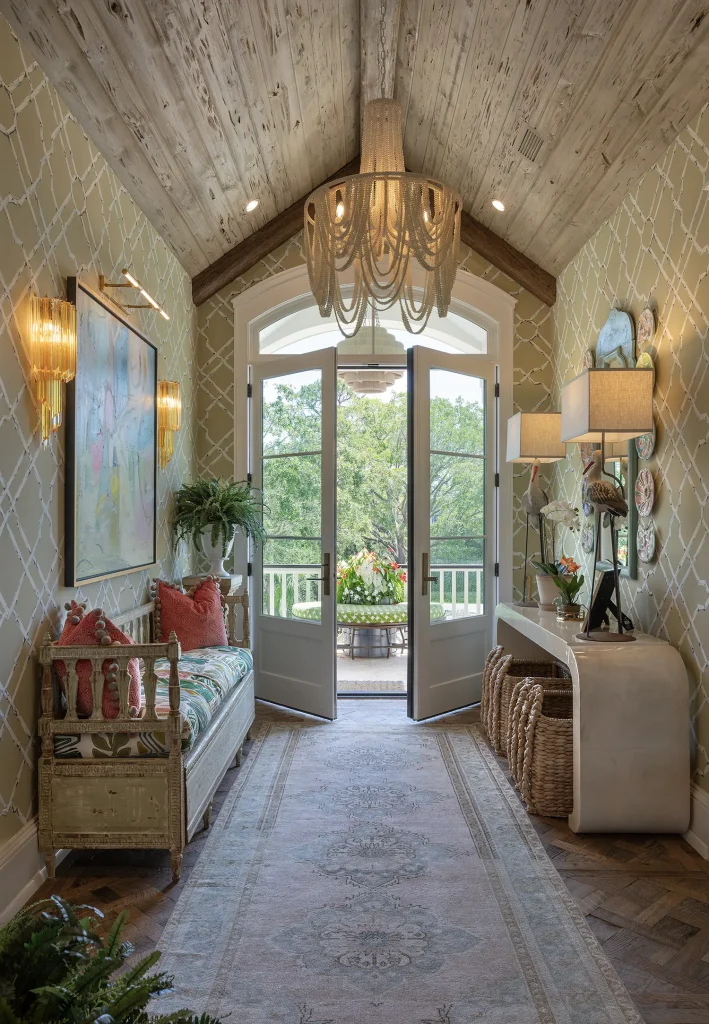
Ask Griffith to pick a favorite detail in a house this layered, and you’ll get a thoughtful pause before an answer — which is itself telling. Two moments stand out. The foyer combines reclaimed beams and antique wood to set the tone the moment you walk in, grounding the home in warmth before the color even fully registers.
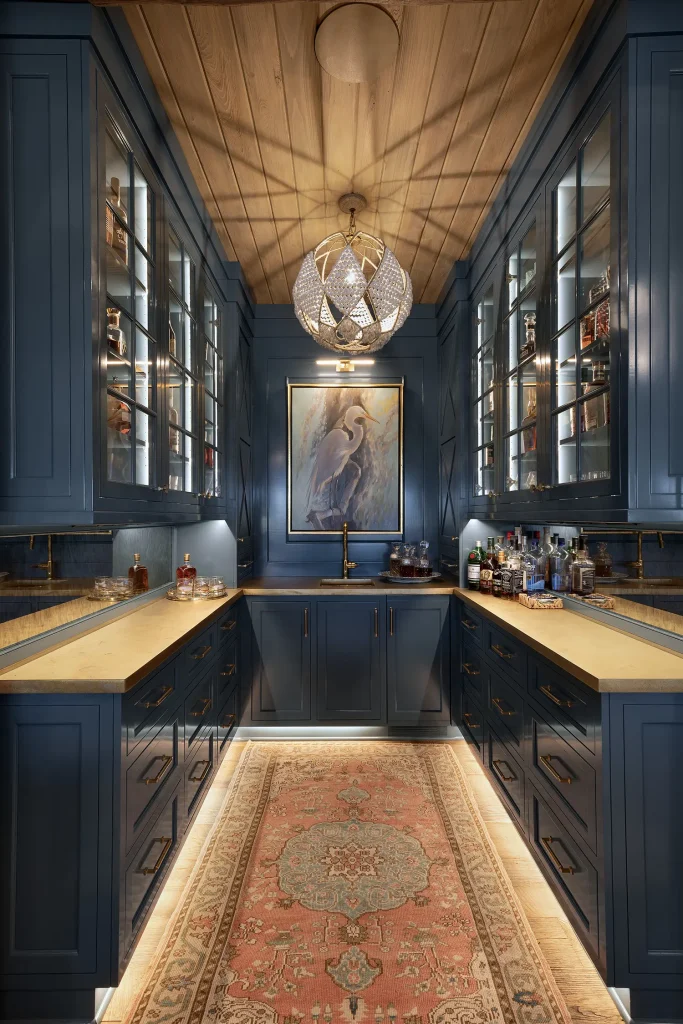
Then there’s the bar: a color-drenched, deliberately dark and moody room that functions as a counterpoint to everything else in the house. Where the rest of the home is bright and airy, the bar leans into shadow and saturation — and having exactly one room built as the “plot twist” makes the rest of the house feel even more intentional by contrast.
Even with those standout moments, the kitchen remains the true favorite — the room that feels the most real, warm, and approachable, no matter how many showstopping spaces surround it.
The Real Takeaway: Don’t Be Afraid to Take a Chance
The most useful thing this project offers isn’t a specific paint color — it’s a philosophy. As Griffith put it: “Don’t be afraid to use color. Don’t be afraid to mix patterns. Don’t be afraid to take a chance.” And the practical reassurance behind that confidence: “Paint colors are changeable. Pillow colors are changeable. So take a chance — because as much as you take a chance is how great your room can look.”
That’s the real “Southern” takeaway hiding inside all this color: warmth, confidence, and a refusal to be precious about a house meant to be lived in, not just looked at.
Griffith and his team documented the whole house, room by room, in their feature on this Palm Beach-style Georgetown home — worth the scroll for the kitchen alone.