Blog Meet Gabrielle Hasenstab, the Charleston Mural Artist Bringing the Marsh Indoors

Meet Gabrielle Hasenstab, the Charleston Mural Artist Bringing the Marsh Indoors

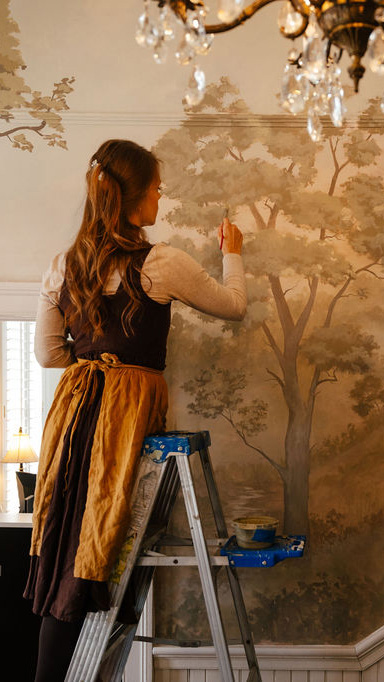
Some walls hold paint. Gabrielle Hasenstab’s walls hold whole landscapes: live oaks trailing Spanish moss, great blue herons lifting off a misty marsh, tall ships crossing Charleston Harbor beneath a canopy of leaves.

A Summerville native now based in West Ashley, Gabrielle is a Charleston mural artist who pairs classical European technique with the plants, animals, and light of the Lowcountry. Her work spans hand-painted murals, trompe l’oeil, and traditional plaster relief, all made with natural, low-impact materials.

We sat down with her to talk about roots, process, and what to consider before you commission a mural of your own.
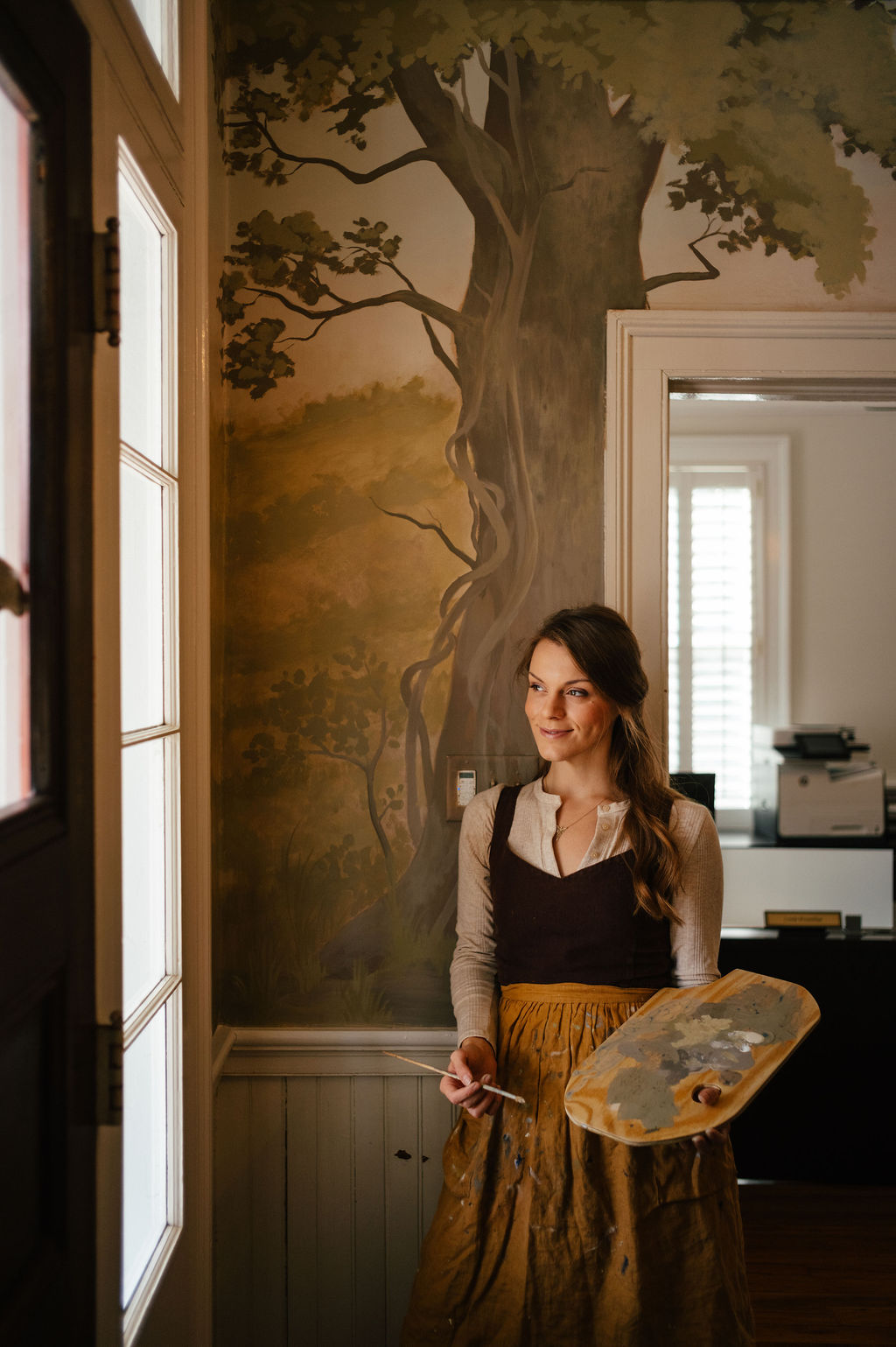
 

Photo: Second Floor Media

A Lowcountry Native With Roots Running Deep

For Gabrielle, the Lowcountry is more than a backdrop. “It’s my home and my ultimate anchor,” she says. “I feel a deep, visceral connection to the wetlands and maritime forests that raised me.”

That connection is almost literal. She describes imagining herself as an ancient cypress, rooted so deeply that she becomes part of the earth. “That reverence is the driving force behind everything I create. If I can capture and convey even a fraction of that natural magic on a wall, that’s when I know a piece is successful.”

From set painting to Lowcountry murals

Her path began far from the marsh. In her twenties, Gabrielle worked a day job in federal communications in Washington, D.C., and spent her free time volunteering as a set painter for community theater. Painting at that massive scale stuck with her, and a question followed: could she actually make a living doing this?

She started with passion projects for friends and family. Word spread, and the commissions snowballed.

Teaching herself plaster relief art

The idea to learn plaster relief art came straight from her clients. When homeowners with minimalist taste asked for original art that suited their spaces, she took it as a challenge and taught herself traditional plaster techniques. The result is artwork with depth instead of color, subtle enough to sit quietly in a pared-back room.

Trained in the old masters

Her classical foundation goes back to her teens, when she studied under mentor Connie Olson, who grounded her in the methods of the European masters. Being half-European, she also spent time abroad in historic churches, palaces, and residences covered in trompe l’oeil murals.

“I was mesmerized by how a flat surface could dissolve into a window to heaven or a sprawling garden, completely transforming the surrounding architecture,” she says. Blending that technical rigor with the raw beauty of Southern nature is, in her words, a dream project.

Painting the South With the South in Mind

Natural pigments, no footprint

Large-scale art disrupts a space by nature, so Gabrielle makes sure the change is entirely positive. She works with non-toxic, low-impact materials, which keeps homes and offices fume-free while she paints.

The reasoning goes beyond comfort. “When I paint a Southern ecosystem onto a wall, I want to make sure the materials I’m using aren’t harming the real wildlife living just outside the window,” she says. “My goal is always to create a lasting visual impact without leaving a physical footprint.”

Where the inspiration comes from

Every plant and animal of the South is fair game. The cypress swamps and tidal marshes around Charleston are, as she puts it, part of her DNA. She studies them constantly, whether kayaking the Ashley River or sitting in a tree stand with her dad on a cold December morning.

She watches for the small things: the deep green of a magnolia leaf, spartina grass reflected in still water, the shape of moss hanging from a gnarled oak. “The natural palette of the South never stops giving.”

Murals vs. studio paintings: Two wings of a plane

Gabrielle also keeps a studio practice, and she treats it as something separate. Murals transform a space that belongs to someone else, in collaboration with the people who use it and the architecture itself. “Does my painting style come through? Of course. But murals aren’t about me.”

Her studio paintings are the opposite: intimate explorations of stories, animals, and emotions with personal meaning. “I view my studio practice and my mural work as the two wings of a plane: distinct in purpose, but both necessary to keep me flying.”

Inside Gabrielle Hasenstab’s Charleston Murals

A two-story harbor view in historic Summerville

One of Gabrielle’s favorite projects lives in an office in historic Summerville. Unlike her residential commissions, this mural fills a busy workspace across two floors. Five massive trees rise from the ground level through the second story, framing a view of Charleston Harbor.

In the foreground, tall ships under full sail cross the water. Behind them, a skyline of church steeples and historic buildings sits along the shore, softened by marsh grass and a warm, hazy sky.

“It was a thrilling exercise in contrasts,” she says, balancing the precise, architectural lines of historic ships and buildings with the loose, organic brushwork that foliage demands.
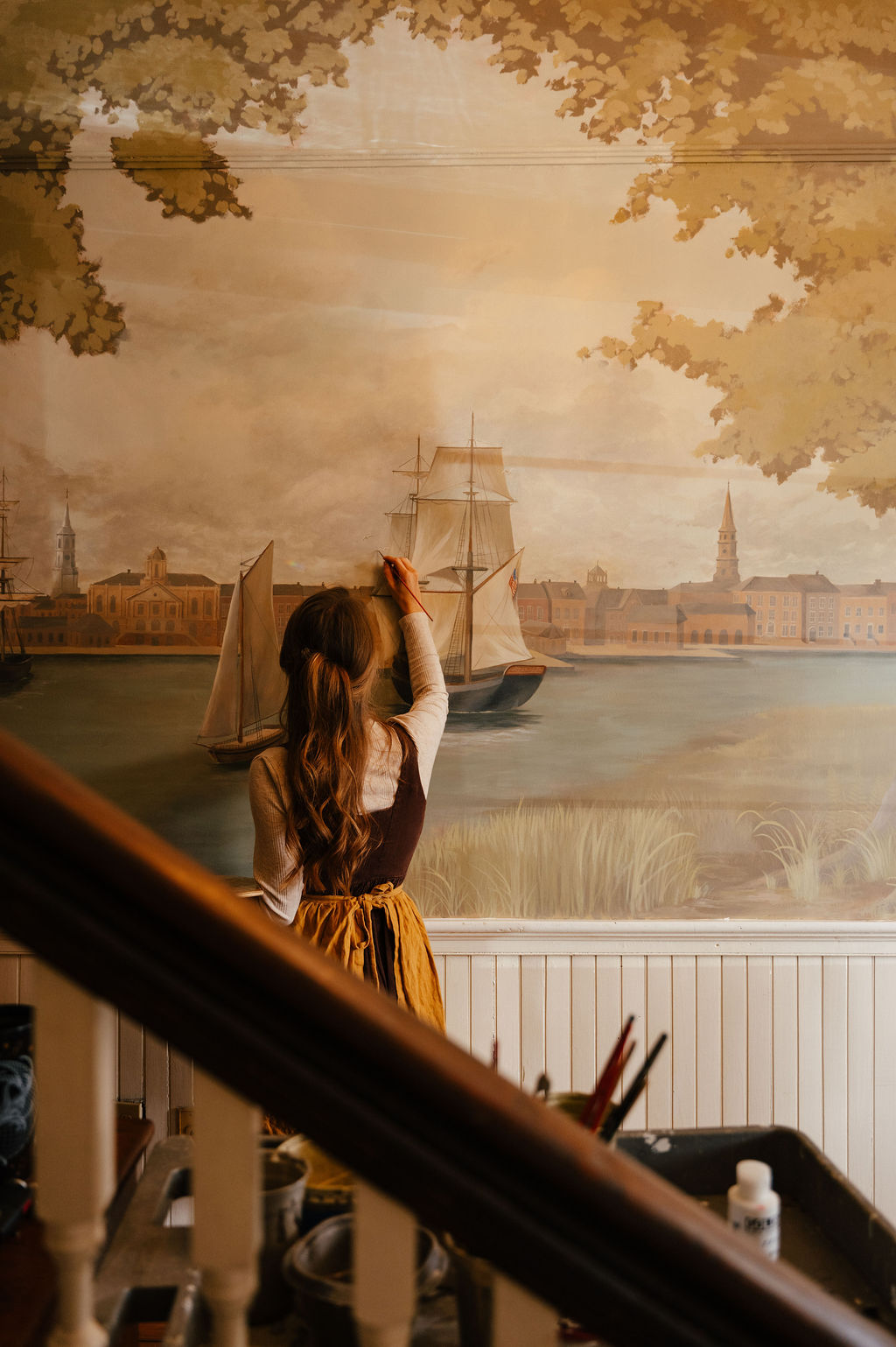
 

Photo: Second Floor Media
A sepia live oak in the kitchen

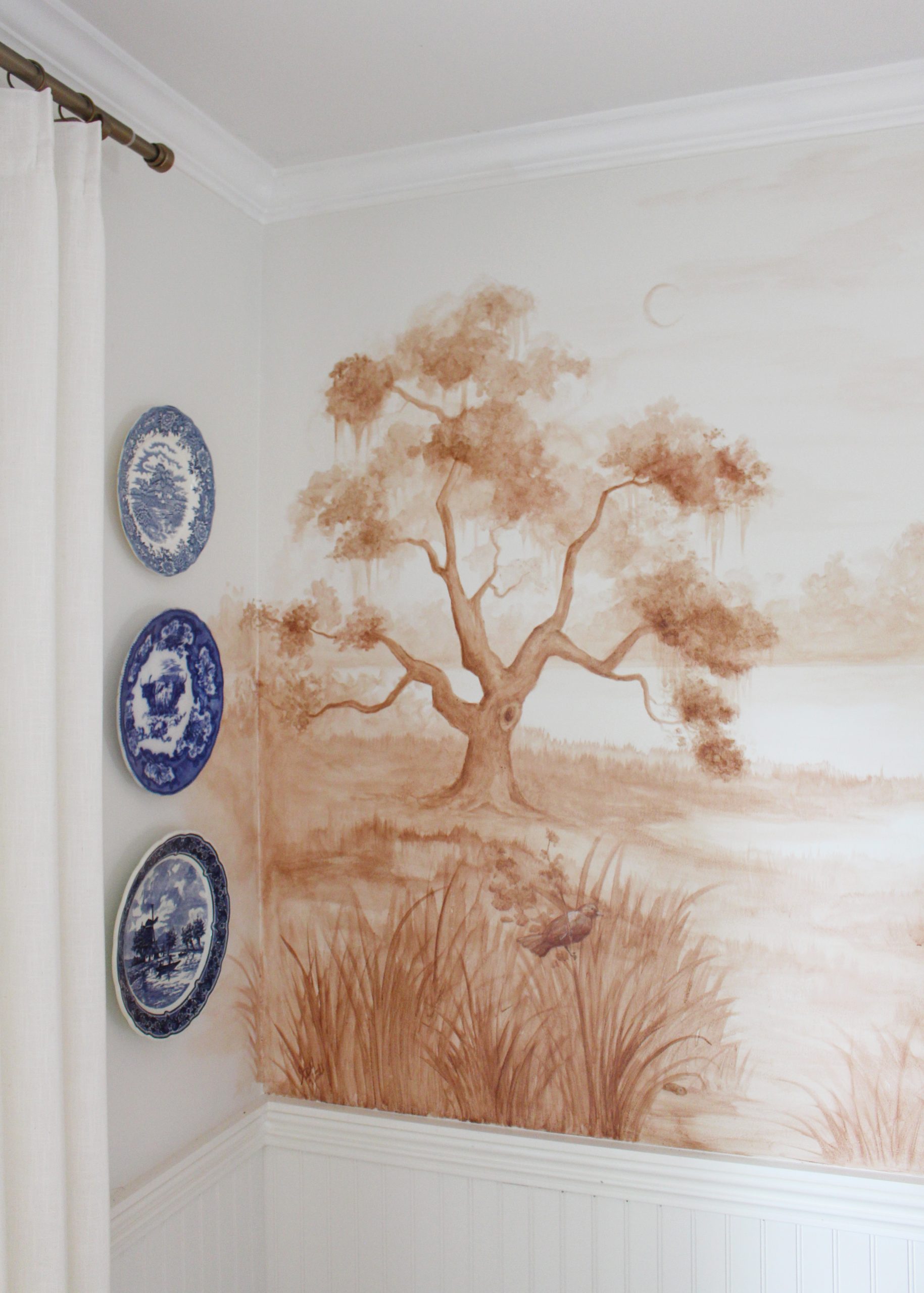
In a residential kitchen, a live oak draped in Spanish moss spreads across the wall in soft sepia tones above white beadboard. A small bird perches in the marsh grass below, and a crescent moon hangs in the pale sky. Blue-and-white transferware plates on the adjoining wall pick up the old-world feel.
 

Herons over the marsh

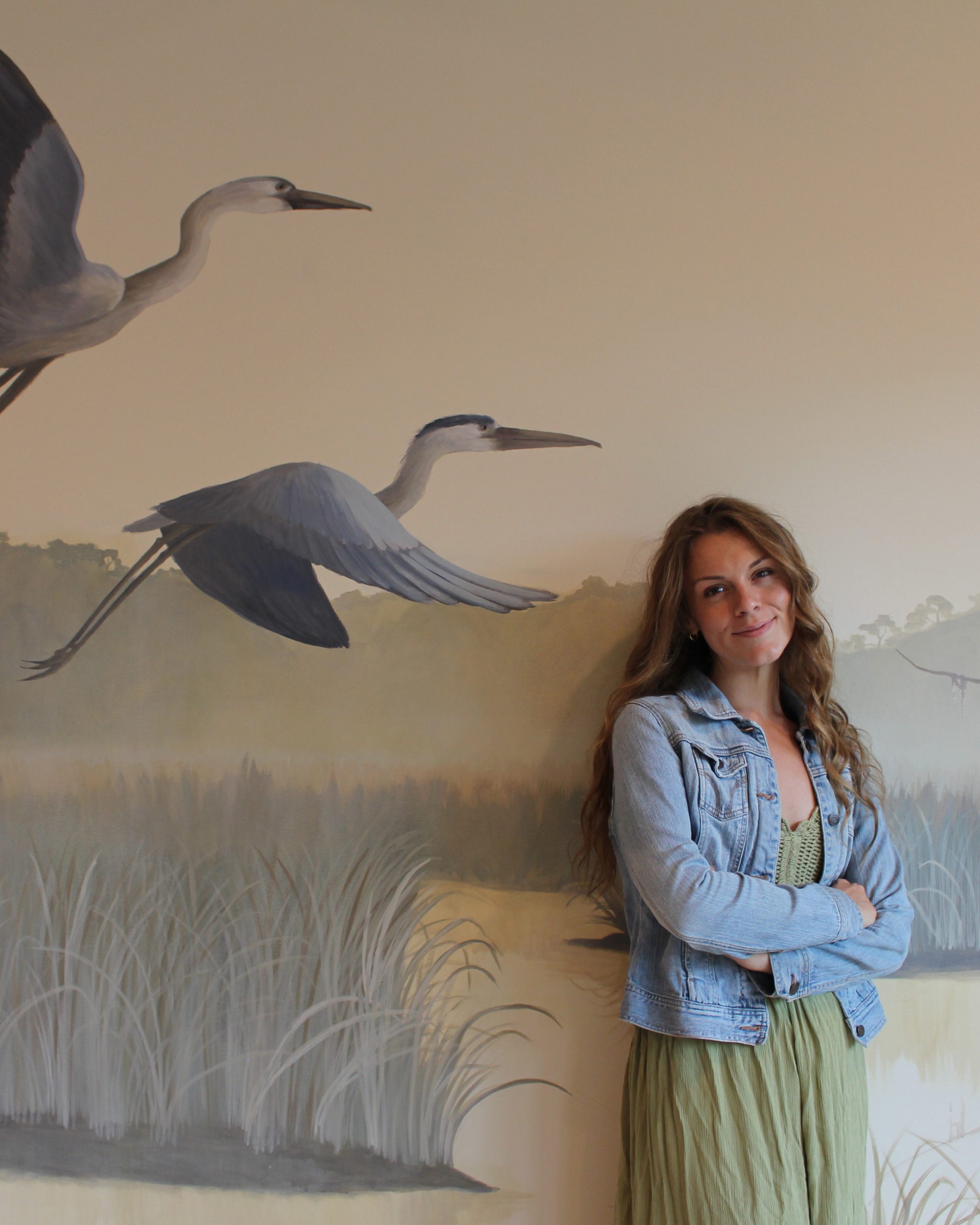
In another Lowcountry home, Gabrielle painted a pair of great blue herons in flight over a misty tidal marsh. Tall grasses fill the foreground, and a treeline fades into the distance in quiet grays, greens, and golds.
Thinking About Commissioning a Mural?

Start with how the room should feel

Before style or subject, Gabrielle asks clients to picture the mood. Light and airy? Warm and cozy? Elevated and modern? “Like stepping into a 17th-century painting?” That answer tells her where to begin.

Weave in your own story

Next, think about the personal details you want hidden in the work. She suggests ideas like three sparrows for three children, a native plant from a favorite trail, or a quiet nod to a family memory.

“I want clients to see their own lives as worthy of being memorialized on their walls,” she says. “The Medicis did it, and so can you.”

What the process looks like

Every one of her hand-painted murals in Charleston homes starts as a conversation about the client’s vision and inspiration. Gabrielle translates that into a digital mock-up or a small hand-painted sketch in watercolor or acrylic.

The sketch is a roadmap, not a rigid preview. It sets the palette, style, and composition, and gives the client room to weigh in before paint touches the wall. Some want a detailed focal point. Others want a secret, like a deer tucked into the foliage.

What’s Next for Gabrielle Hasenstab

The Charleston mural artist is booked with projects across the Carolinas through early 2027. Her goals from here: keep refining her plaster work, make studio painting an equal part of her practice, and take on a large-scale public project rooted in community.

“It feels like I’m at the very beginning of what my work and this business will become.”

See more of her work and inquire about commissions at ghasenstudio.com and on Instagram at @ghasenstudio.

Looking for more local art? Start with our guide to Charleston art museums.

Share this post