There was no single painting that set Jennifer on this path. It was a feeling that was there from the start. The first real sign came at age seven, when her father entered one of her drawings in a local art show. It took first prize in her age group, complete with a blue ribbon and a little cash.
“I went straight out, bought myself some candy and learned pretty early that you could actually get something you wanted through art,” she says. “Not a popular belief, I might add.”
By nine or ten, her father was teaching her to oil paint. He gave her a professional painter’s box and took her out to paint the landscape of Bucks County, Pennsylvania. She remembers being fascinated by all of it: studying the view, mixing colors, watching the light change. “He made painting feel like something you could actually do and make it part of your life.”
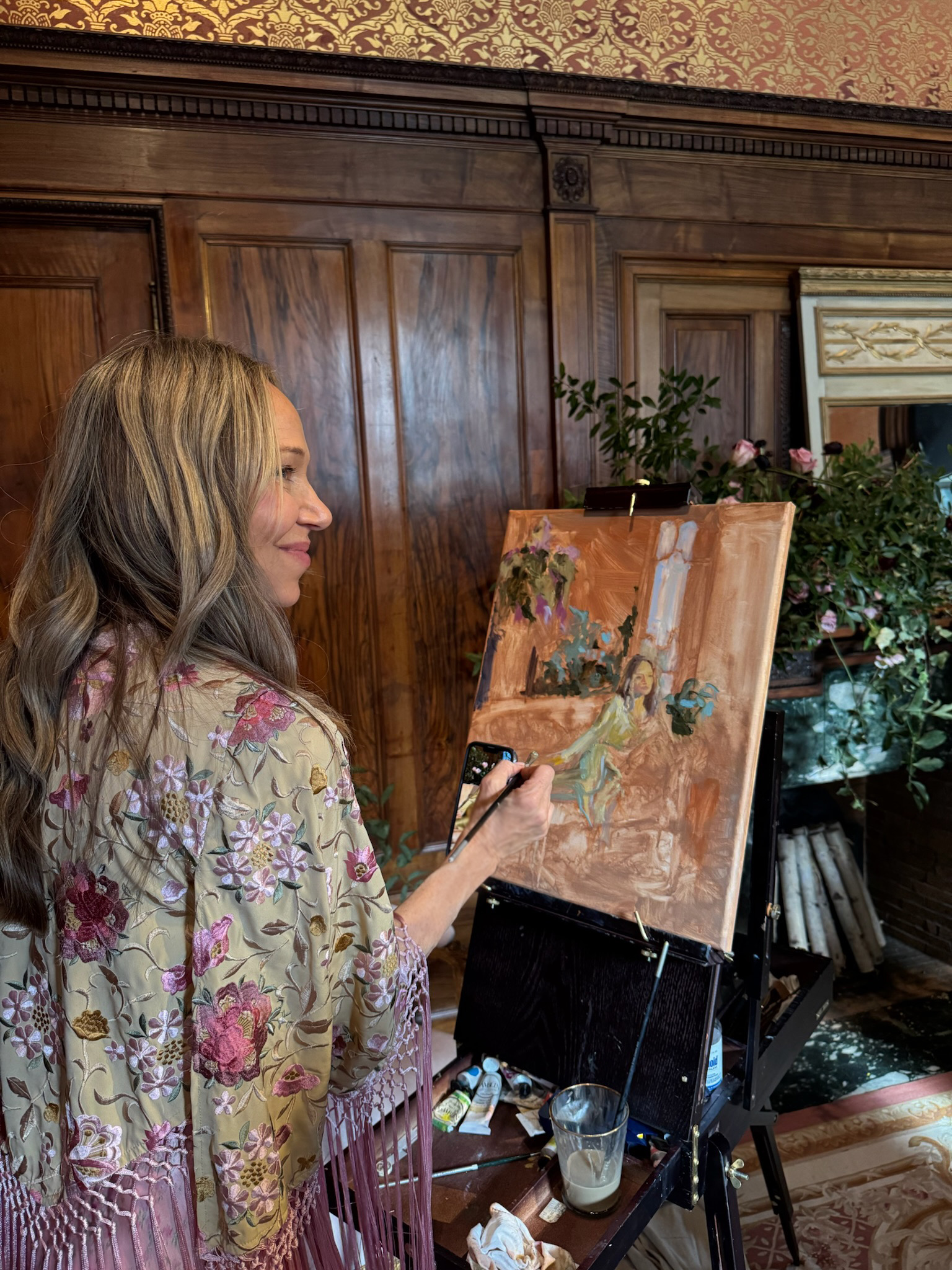
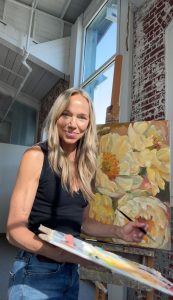
For about 15 years, Jennifer ran a design firm and loved the work. After her third child was born, though, she felt a little lost creatively. Her husband bought her a beautiful painter’s easel and reminded her that she was always saying she wanted to be a painter.
“I became a painter as I didn’t want it to go to waste,” she says. She still uses that easel today.
Painting slowly took over. Her first show came in 2007, and the work kept growing from there. “At some point I realized that painting wasn’t something I was trying to fit into my life anymore. It was the work I wanted my life to be about.”
Jennifer approaches each canvas as a problem to solve visually. The questions are constant: What matters most here? Why this subject, at this moment? Where does the eye land first? What can be left out? Where does the painting need more color, more light, more weight?
It doesn’t always come easily, and she is candid about that. “I still have that moment of staring at a blank canvas and wondering, ‘can I pull this off?'” Once she’s in it, though, she’s chasing the answer. Some paintings tell her what they need right away. Others require walking away and returning the next day with fresh eyes.
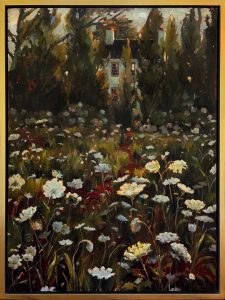
The answer starts close to home. Both flowers grow abundantly in her garden, and they’re her two favorites. They’re also two of the hardest subjects she paints.
Peonies, she explains, have incredible folds, with unexpected colors hiding in the shadows and highlights. They can read as bold and dramatic or soft and almost fleeting. Hydrangeas are a different flower entirely, yet they share that same abundance and complexity.
The secret, when it works, is restraint. “When I nail them it’s usually with gestural stroke and not too much detail.”
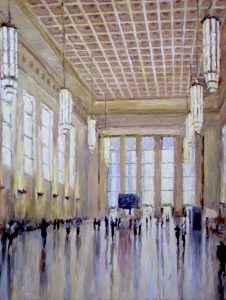
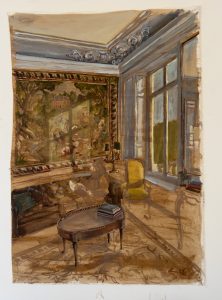
Inspiration, for her, mostly comes from paying attention: the Bucks County landscape, her garden, old buildings, the way light falls across a room or a figure. Travel adds to the mix, with each trip bringing what she calls “a new bag of interesting subjects to paint.”
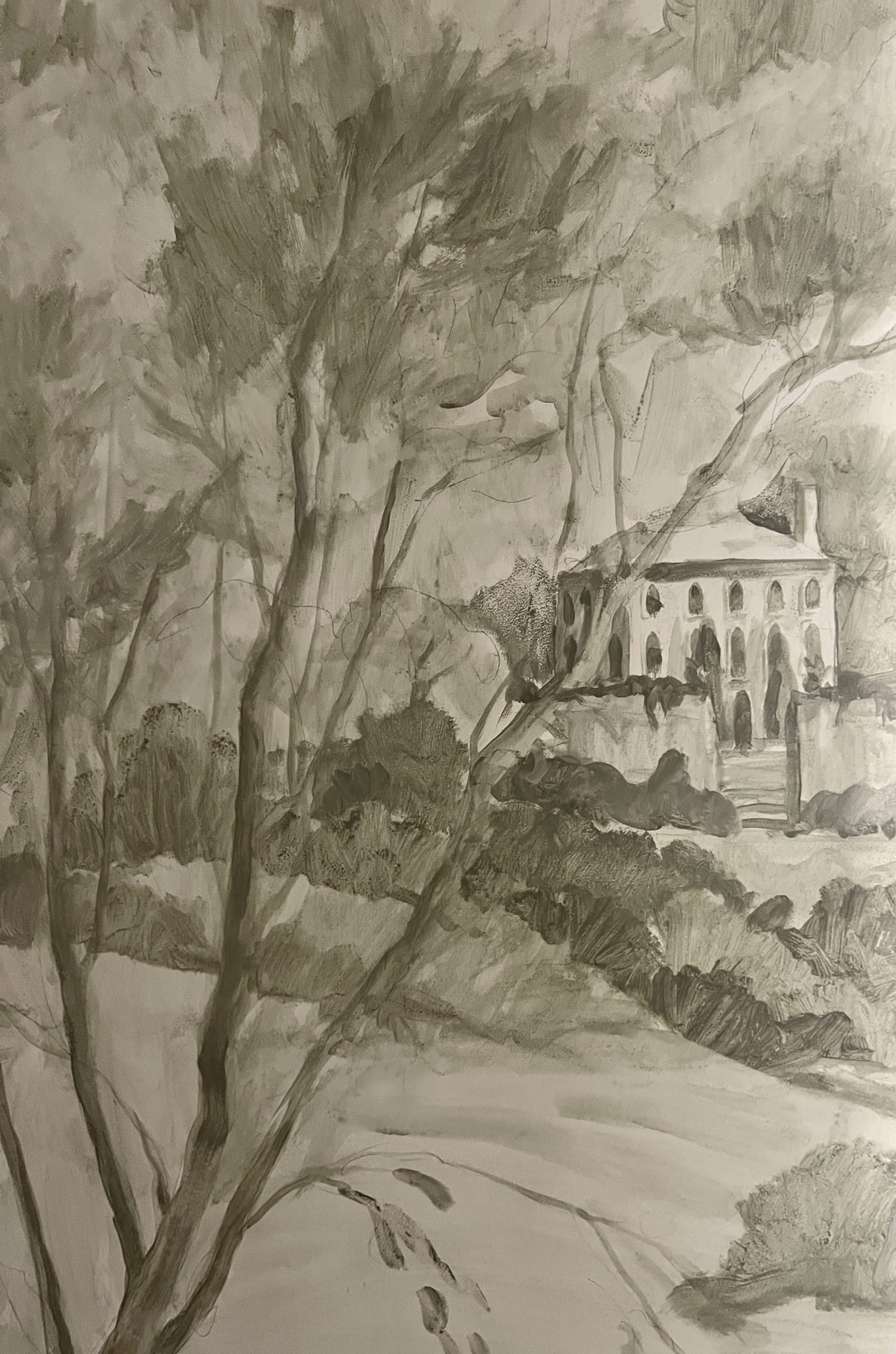
One trip changed her work more than most. During a two-week residency at Château Orquevaux in France, she pinned gessoed linen directly onto the walls of a former horse stable and painted nonstop. She finished twelve paintings in two weeks. “For the first time in decades, all my time was my own.”
A fellow artist there gave her advice that stuck: don’t treat your work as too precious. It opened up a new freedom to take risks, make a mess, paint over something, and keep going. Back home, people noticed the work felt freer and more confident. She noticed it too, and knew it was time for a studio outside her home now that her children were raised.
She returns to France in a few weeks, this time to work on new children’s books.
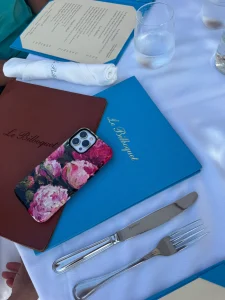
Some of her paintings now live on phone cases, which she loves. “A painting doesn’t have to stay in a frame to be art.” Translating a canvas to something that fits in your hand is its own design challenge: scale, cropping, color, and how the image reads at a small size. Her years as a designer come in handy. “It’s another kind of puzzle.” Her shop, Jennifer Hansen Rolli Design Co., carries peony and hydrangea phone cases alongside fine art prints, note cards, and gifts.
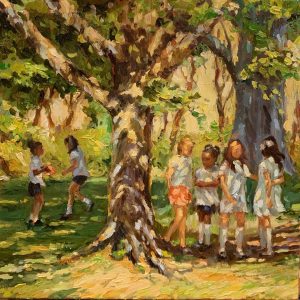
What she hopes for most is that her work makes people stop. She wants viewers to wander through the light and shadow and the rich strokes of paint, and maybe notice something they’d otherwise miss: drops of sunlight in the grass, light on a figure’s hair, the glow of a backlit tulip.
No two people see her paintings the same way, and she likes that. Some of her favorite moments happen when she’s a bystander at a gallery, watching someone really take in a piece. Others come years later, when a collector tells her how much they still love living with a painting.
After all this time, the draw is the same as it was in Bucks County as a kid. “I’m still fascinated by color and light. I’m still trying to figure things out. There is always another painting to make and another puzzle to solve.”