Seersucker isn’t a Southern invention. It started in South Asia centuries ago, built for hot, humid weather. The puckered weave holds fabric off your skin and lets air move underneath. The American South adopted it hard, starting in New Orleans in the early 1900s, and never let go. Below: the real history, how the weave actually works, and how to wear it today without looking like a Derby costume.
Ask most people where seersucker comes from, and you’ll probably hear “the South.” That’s only half right. We didn’t invent this fabric. We just adopted it, then refused to let it go.
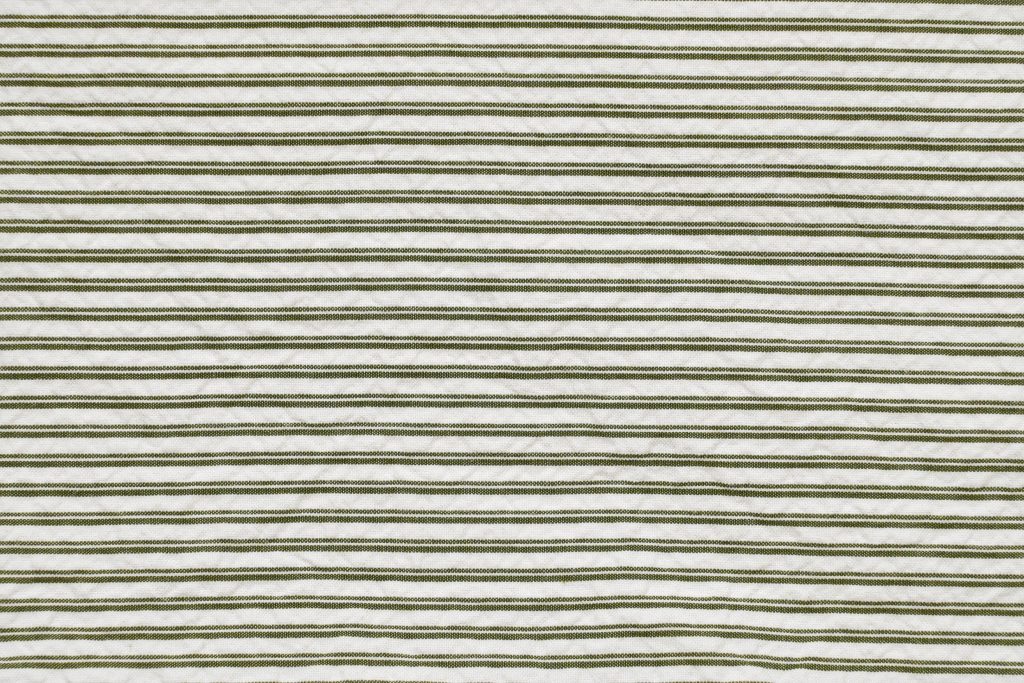
Seersucker is a lightweight cotton fabric with a signature, unmistakable look: thin stripes that alternate between smooth and puckered. Run your hand across a piece, and you’ll feel actual ridges, almost like tiny permanent waves.
That texture isn’t decorative. It’s structural, engineered directly into the weave. Some threads are woven tight across the loom, while others are left loose on purpose. The loose threads bunch into ridges, and the tight ones stay flat beside them. That deliberate contrast is what produces the characteristic stripe.
Most seersucker is 100% cotton, though some contemporary blends work in linen or a touch of stretch fiber. Classic seersucker, the kind you’d find in a proper summer suit, is cotton through and through. Wikipedia’s rundown covers the technical construction in more depth, if you want to go further.
Here’s the part most style guides conveniently skip. Seersucker’s name isn’t even English. It comes from a Persian phrase, “shir o shakkar,” which translates to “milk and sugar.”
The name works as a small metaphor. Milk is smooth. Sugar is grainy and textured. Seersucker carries both qualities in a single cloth, alternating between the two, and that contradiction is exactly why the name stuck around for centuries.
The fabric itself traces back to South Asia, probably as far as the Mughal era in India. Weavers there developed a technique called slack-tension weaving, using two sets of threads under different amounts of tension. One set stayed tight on the loom, while another stayed deliberately loose. The result was a cloth that lifted slightly off the skin, a genuinely useful trait in a hot, humid climate.
European traders encountered the fabric in the 1600s and 1700s and brought it home. British and French mills soon started weaving their own versions for a growing colonial market. By the 1800s, seersucker had made its way into the American South through those same colonial trade routes. Heddels’ history piece lays out that full, tangled timeline in far more detail.
So when someone insists seersucker is “an old Southern fabric,” they’re quietly skipping over a few centuries and two entire continents. It’s genuinely an old South Asian fabric, one the American South later adopted and eventually claimed as its own.
Seersucker was already for sale in New Orleans shops by the early 1900s, well before it became a regional symbol. But one name gets most of the credit for turning it into an enduring Southern staple: Haspel.
Joseph Haspel began manufacturing seersucker suits at his New Orleans factory around 1909. He’d previously made rugged workwear for factory laborers and reasoned that office workers deserved similar relief from brutal summer heat. Haspel’s own history page tells that origin story in full, and the Historic New Orleans Collection has published a thorough piece separating the myth from the documented facts.
Remember, this all happened long before air conditioning became standard. A Southern businessman stuck in a heavy wool suit through July was genuinely miserable. Haspel’s seersucker suits offered real, practical relief, and the style caught on quickly across the region. Politicians wore it publicly. Lawyers wore it into courtrooms. It even became a brief, celebrated Senate tradition. The fabric earned its reputation honestly, one sweltering Southern summer at a time.
Here’s the part that matters most on a genuinely brutal, 95-degree day in Charleston: the puckered weave isn’t just a stylistic detail. It’s doing real, measurable work against the heat.
Those raised ridges hold the fabric slightly away from your skin instead of clinging to it. That small gap creates a thin layer of moving air between your body and the cloth. Moving air helps sweat evaporate faster, and evaporation is the actual mechanism that cools your skin down. Flat, tightly woven fabrics skip that gap almost entirely, so they cling and trap heat against you. Seersucker simply doesn’t behave that way, at least not nearly as much.
There’s a practical bonus, too. The puckered texture hides wrinkles remarkably well. You can wear it all day, sit through a long car ride, sweat through an outdoor reception, and it still looks reasonably presentable afterward. Plain cotton wrinkles visibly and immediately. Seersucker wrinkles too, technically, but you’d hardly notice. Gentleman’s Gazette breaks down the underlying weave mechanics in more technical detail, if you’re genuinely curious.
We’ve covered Charleston heat-and-humidity dressing at considerable length elsewhere, including which fabrics genuinely hold up on the worst days of August. For the fuller breakdown of what to wear beyond seersucker alone, our guide to dressing for Charleston heat and humidity covers that ground thoroughly. This particular piece stays focused on the fabric itself.
Seersucker has a genuine reputation problem. Plenty of people picture it on exactly one guy, at exactly one event, in a blue-and-white suit, holding a mint julep. That’s a real, legitimate look, sure. It’s simply not the only option available anymore.
As a suit. Modern seersucker suits fit noticeably slimmer than the boxy versions from decades past. Since the puckered fabric already adds a little visual bulk, a properly tailored cut keeps the whole silhouette from looking sloppy or oversized. Stick with classic colors, like navy and white or a muted tan. Save the loud, novelty prints for an actual costume party.
As separates. A seersucker blazer worn over jeans and a plain white tee is an easy, low-commitment entry point. It reads as intentional and put-together, not stuffy, and it skips the full-suit commitment entirely.
In women’s fashion. Seersucker shows up regularly in sundresses, wide-leg trousers, and breezy swim cover-ups. The same underlying logic applies here: it breathes well, it hides wrinkles, and it looks a bit more special than plain, ordinary cotton.
For weddings. Seersucker is a genuinely smart pick for a summer wedding, especially an outdoor Lowcountry ceremony. If you’re unsure exactly how formal to go, our wedding guest attire guide walks through what fits each season and venue type.
Mixed with other trends. Seersucker actually pairs quite well with the current wave of heirloom-inspired style. Picture a seersucker shirt worn with a signet ring, or a seersucker dress paired with a monogrammed bag. Our piece on the monogram and grandmillennial trend covers how to wear heirloom details without looking dated or costume-y. And if you’re trying to place seersucker between two aesthetics people constantly confuse, our Coastal Grandmother vs. Southern Style breakdown draws that distinction clearly.
The short version here: seersucker is simply a fabric, not a costume. Wear it the way you’d wear any other good cotton piece in your closet. Just lean into the fact that it genuinely handles Southern heat better than almost anything else you own.
Not all seersucker on the market is created equal. A handful of details separate a piece that lasts for years from one that falls apart quickly.
Seersucker is genuinely low-maintenance, and honestly, that’s a big part of why it has survived for centuries. A few basic habits keep it looking sharp.
Wash it in cold water, using a gentle cycle whenever possible. Skip the bleach entirely. Air dry it if you have the patience, since a hot dryer is the fastest way to flatten the pucker and shrink the fabric permanently.
Skip the iron entirely, if you can manage it. The texture already conceals most wrinkles on its own, and high heat can press that signature pucker flat for good. If something genuinely needs smoothing, a light steam does the job safely, without risking the weave.
Seersucker didn’t actually start in the South. Still, it’s genuinely hard to think of a fabric that fits this region better. It was engineered for heat, engineered for humidity, and somehow still manages to look good doing both. That’s a distinctly Southern set of priorities, whether it started here or not.
We’ll take a fabric with real, documented history over a fleeting trend with none, every single time. Explore more of what that philosophy looks like in our Style section, where we cover the pieces that genuinely earn a spot in a Charleston closet.

A passionate and creative female blogger who captivates the digital world with her unique voice and compelling storytelling.