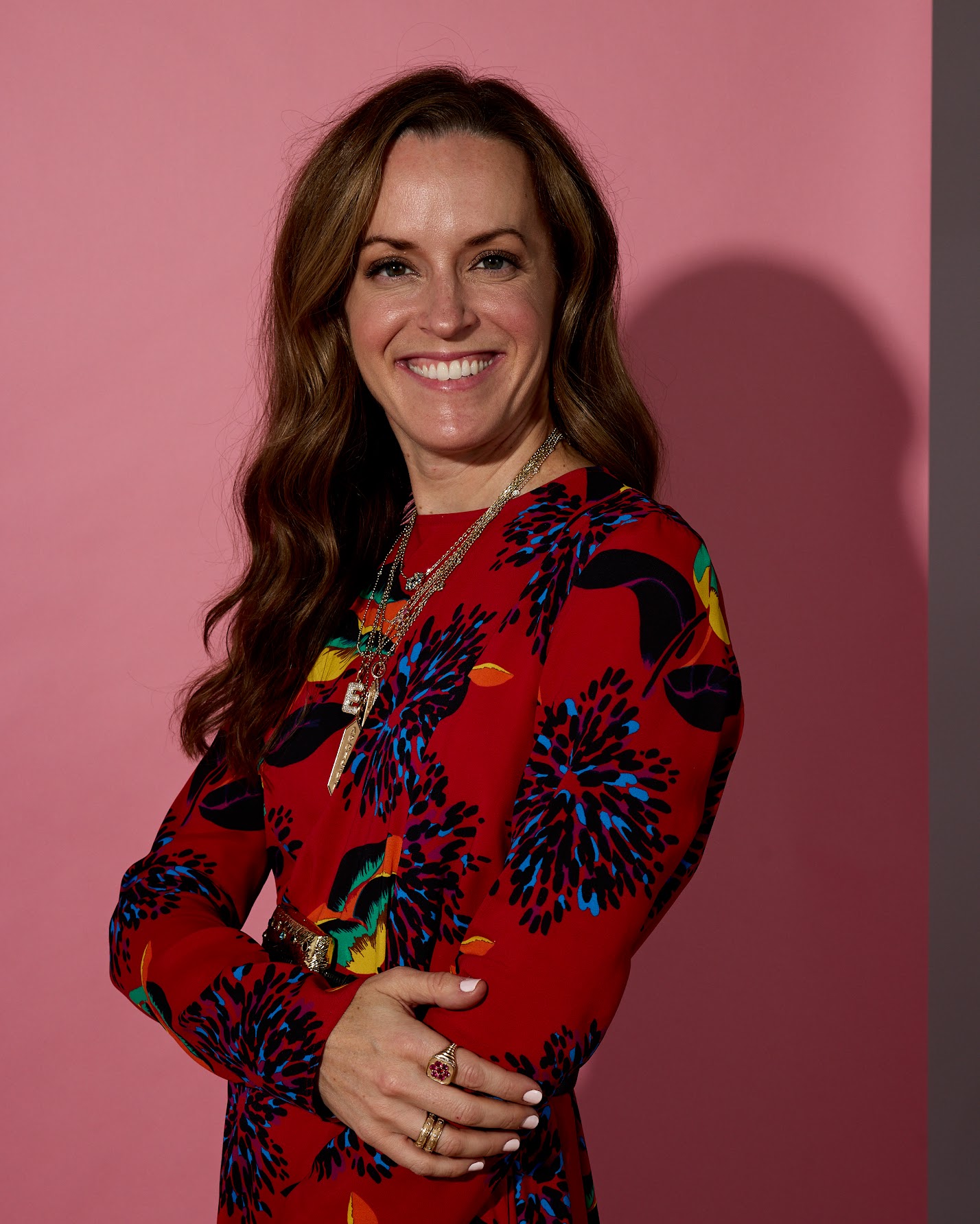
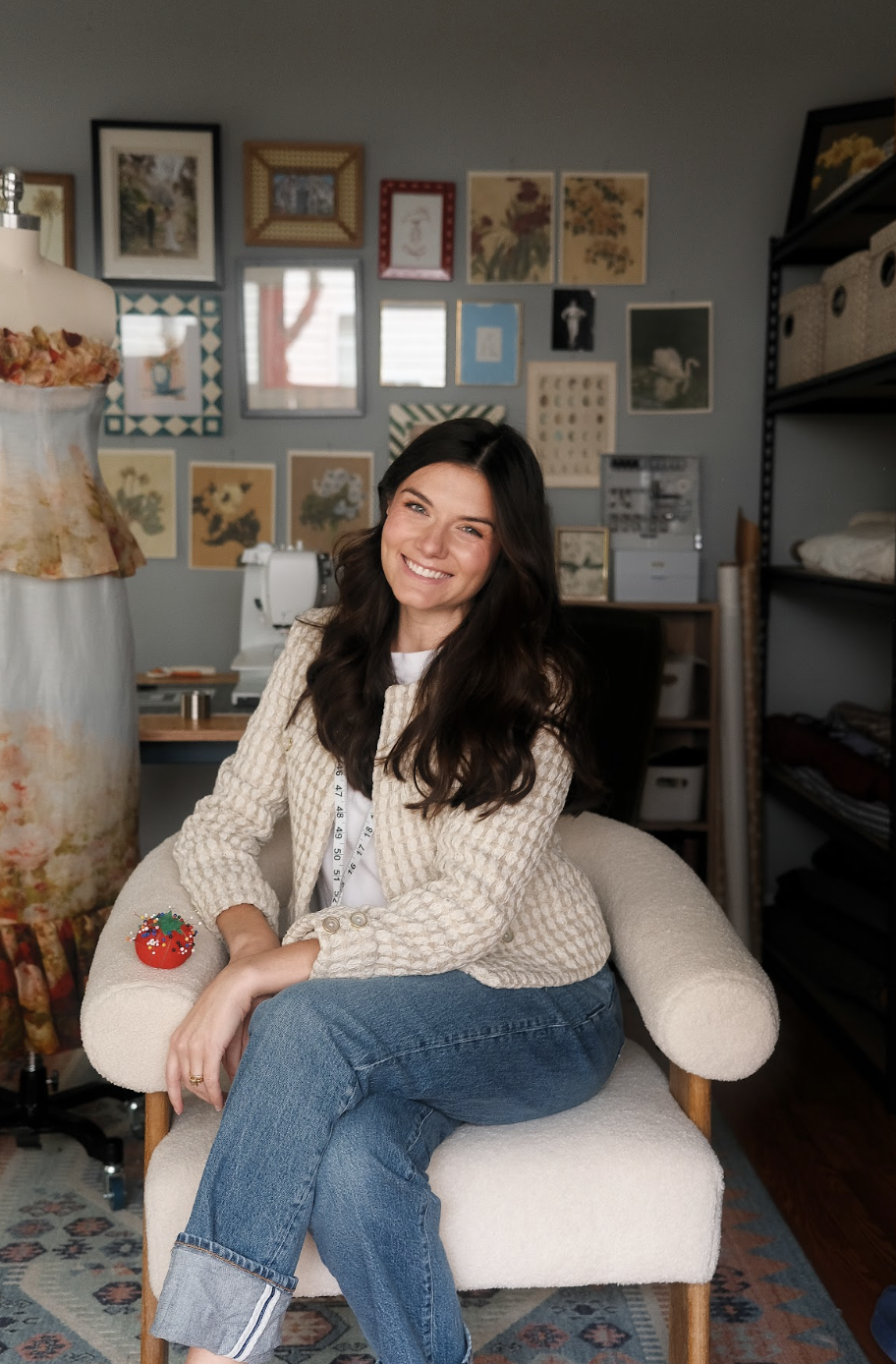
There is a difference between a dress you buy and a dress that is made for you. Katherine Gilliam, the founder of Namesake Sewing, has built a business around that difference. Her custom gowns and special occasion dresses begin with a conversation, a mood board, and a bolt of silk that was waiting for the right person.
A South Carolina Childhood, Sewn by Her Mother
Katherine (K. Lee to friends and family) grew up in South Carolina, starting out in the small town of Florence before her family moved to Chapin, outside Columbia, during her freshman year of high school. One of five kids, she was raised by a mother who is endlessly creative, from home renovations to dressmaking. She sewed all of Katherine’s pageant dresses, and those hours of dreaming up one-of-a-kind pieces together are some of Katherine’s fondest memories growing up. So when it came time for her wedding gown, she knew exactly who she wanted to make it: her mother. Katherine had a specific vision she knew she’d never find off the rack, and her mother built it from scratch around that vision alone. It’s stayed with her ever since: a custom dress, made with love just for you, takes on a life of its own.
Pageants led her to New York after high school, where fashion and entertainment were suddenly close at hand. She chose to return to South Carolina for college at USC instead, and for a while, she set the calling aside. It kept circling back.
From YouTube Tutorials to a Custom Dressmaking Business
Katherine started Namesake Sewing during a season of change. She’d just gotten married and moved a few hours from her friends, and her husband deployed soon after. Looking for a creative outlet that felt like her, she taught herself to sew and draft patterns through video tutorials, books, and plenty of trial and error. The first pieces, by her own admission, were terrible.
But she kept at it, and along the way, she realized she loved the process of making more than the finished result. She began sharing her work online, and it wasn’t long before people were asking her to make pieces for them, too. Sewing remained a hobby for years while she built her skills and set a high bar for the name she wanted to put on her work.
It eventually became a full business, one that’s since moved with her family: Katherine’s husband, a US Navy officer, and his current assignment brought the Namesake studio to its new home in Annapolis, Maryland.
Why It’s Called Namesake
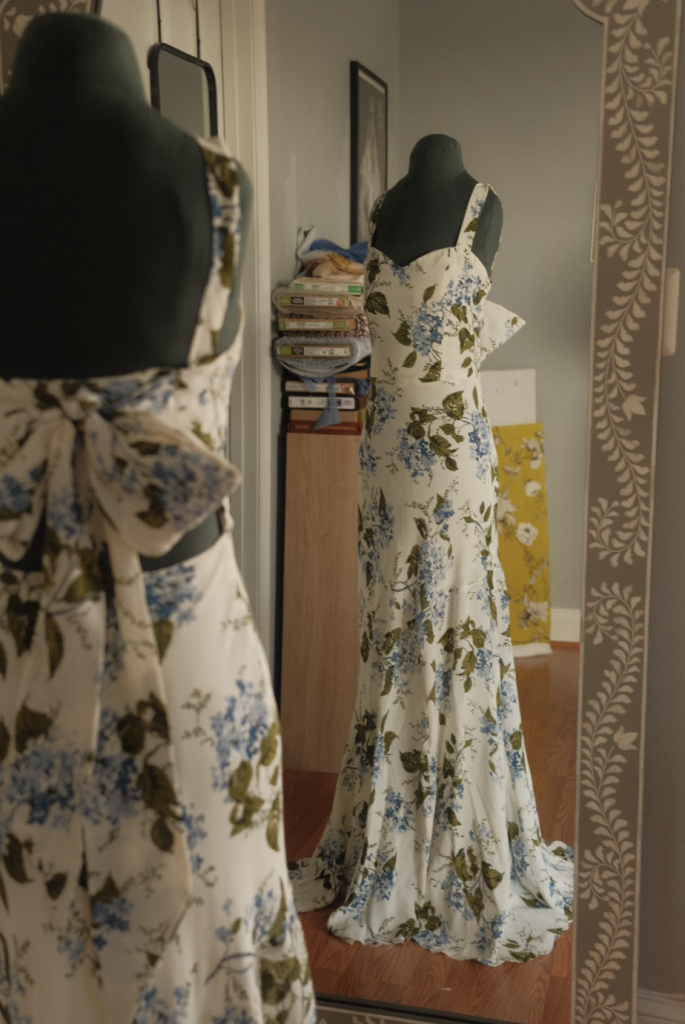
The name comes from her faith and the belief that every person is individually and purposefully made. In a time when it is easy to feel anchorless, Katherine wanted a tangible version of that idea: a dress that is one of a kind, made with purpose, and designed to bring out the loveliest qualities of the woman wearing it.
Designer Deadstock Silk, Found One Bolt at a Time
Namesake gowns are cut from designer deadstock silk, the leftover luxury fabric from fashion houses such as Oscar de la Renta and Carolina Herrera. Katherine finds it through a mix of specialty deadstock suppliers, friendly online sellers (Etsy and eBay can be surprisingly good if you know where to look), a supplier who sources from Europe, and periodic trips to shop the garment district in person.
There is a practical upside to this material beyond beauty. Because deadstock reuses existing fabric instead of manufacturing something new, it is a more sustainable choice, and the quality can rival what you would find at a bridal boutique or a high-end designer. Katherine even has a Vera Wang silk faille on hand for a very special bride, ready whenever she walks through the door.
The Toile Fitting: Where a Custom Dress Gets Its Fit
The heart of the Namesake process is the toile (pronounced “twahl”), a test version of the dress sewn in practice fabric. Every dress starts flat, as a sketch and then a pattern, which Katherine compares to the blueprint of a house. Some things only show up once that blueprint is on a real body.
Standard retail sizing is built on a basic block pattern, but those patterns aren’t always a good fit for many women. Katherine adapts the block to the client’s own measurements, drafts the pattern from there, and sews it into the toile.
Then comes the fitting: marking, pinning, and adjusting the toile on the body, live. Two people can share the same waist measurement and still need a completely different fit, because where the waistline sits matters as much as how big it is. A computer can send measurements to a manufacturer, but it cannot pin and shape fabric to you.
Mood Boards Welcome, Replicas Politely Declined
Most clients arrive with a mood board full of dresses they love, and Katherine encourages it. The first step is always a design consultation, where she reviews the references, talks silhouettes, and often sketches a few ideas. Materials come next, since what is available often shapes what can be made.
What she does not do is recreate another designer’s dress exactly. She respects design as intellectual property, and she points out that anyone who wants an exact look is usually better served by the designer who created it. Instead, she helps clients take their references somewhere new, toward something that could only belong to them. The process stays a conversation through the toile, with the fit, the shoulder, and the details evolving along the way. No two Namesake dresses are alike.
Inspiration From Everywhere, Especially Flowers
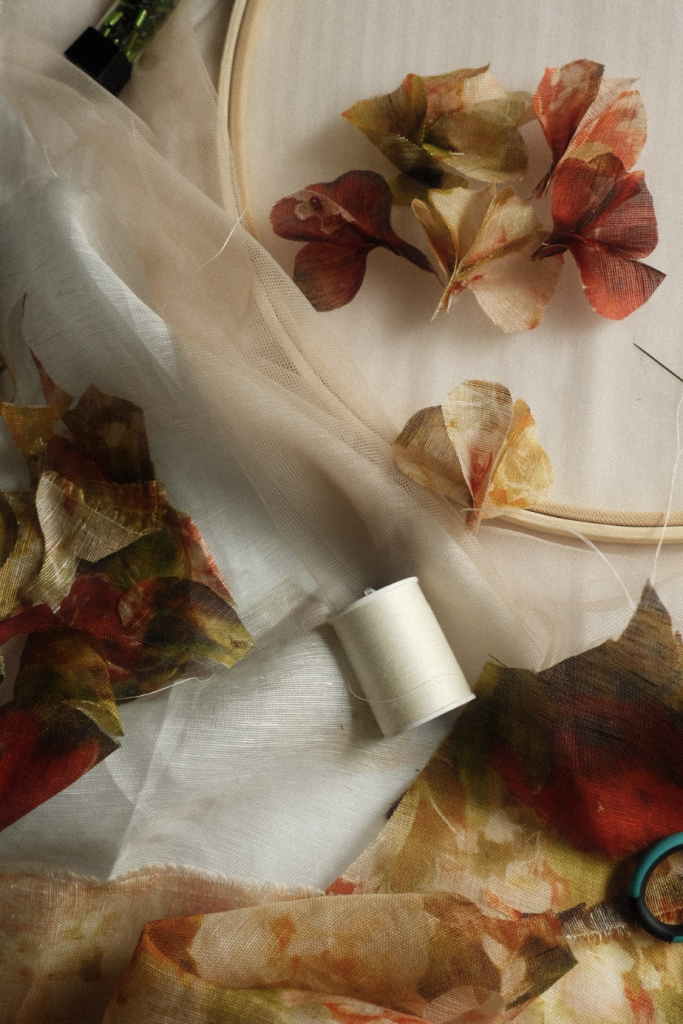
Katherine admires Erdem for textures and silhouettes that mix hard and soft, and she loves how Jonathan Anderson’s work at Dior puts craftsmanship and artist collaborations front and center. But there is a saying she likes: “To be great at fashion, study everything but fashion.” Beyond runways, she looks to museums, nature, and the flower bouquets her husband brings home almost every week.
One of those bouquets inspired a wedding guest dress she made for a close friend’s wedding. She deconstructed the flower and studied its life cycle, from early bud to full bloom, and let that shape both the silhouette and the appliqué. Another favorite is a more casual, ready-to-wear-style dress made with a friend to mark the birth of her baby. Both point to what Katherine most wants to do: help women celebrate milestone moments with pieces that stay in their wardrobes long after the day itself.
Planning a Custom Dress: What to Know Before You Reach Out
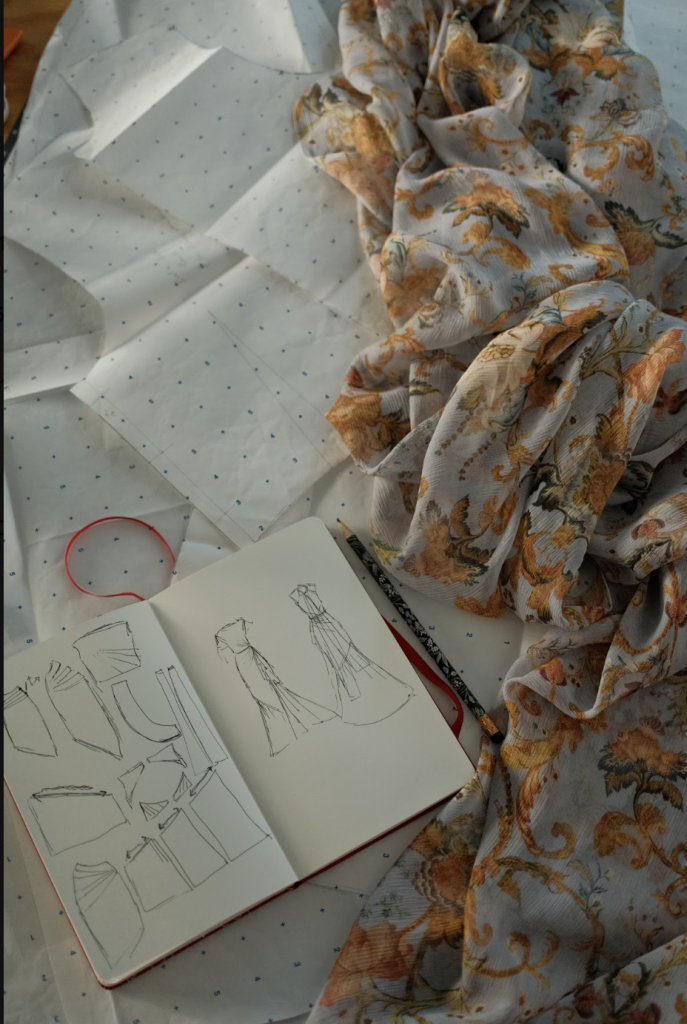
Thinking about a custom wedding dress or special occasion gown for 2027? Katherine’s advice:
Try on dresses first
Visit a boutique and try on as many silhouettes as you can, formal or bridal. Learning what you gravitate toward gives you a much stronger starting point.
Start as early as possible
Longer timelines are better, and she recommends beginning at least six months before the event. She is currently working with a bride whose wedding is next October, and they started last month.
Think of custom as an investment
Custom clothing is a reallocation of budget toward something unique, collaborative, and made with higher-quality materials than you might expect from designer pieces at a similar price point.
Because Namesake is a one-woman studio, Katherine takes on a limited number of clients at a time. She sees that as a good constraint: each piece gets her full attention, and the women she works with are looking for a slow, steady process, not a rush job.
The Case for Slow Fashion
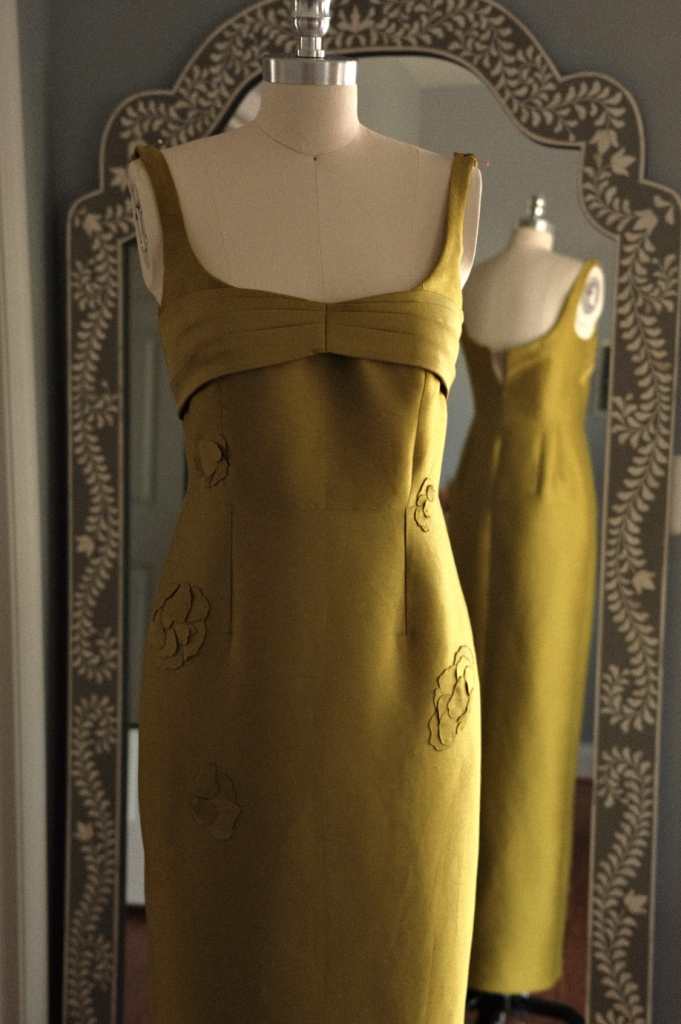
What Katherine loves most about the work is making something from nothing, with her own two hands. Most clothing is still touched by human hands somewhere along the way, and she is passionate about asking who makes our clothes and where they come from. Being part of the slow fashion movement, and working with women who value a dress as a piece of art, is exactly where she wants to be.
Follow Namesake Sewing
To see Katherine’s work, follow Namesake Sewing on Instagram and visit her website.