
Beaufort is about 70 miles and roughly an hour and a half from Charleston on US-17, and while most people treat it as a day trip, we think that’s a mistake. Beaufort has its own historic district, its own beach (Hunting Island), and a film history longer than most small cities can claim. Stay the night, add Edisto Island or the Old Sheldon Church Ruins on the way down, and come back changed, or at least well-fed.
Charleston gets most of the attention around here. That’s understandable. It’s our home base, and we’re genuinely fond of it. But about 70 miles south, on a quiet stretch of US-17, sits a historic Lowcountry town that deserves more than a passing glance from Charleston travelers.
Beaufort, South Carolina sits on Port Royal Island, surrounded by tidal rivers and draped in Spanish moss, and it’s the second-oldest city in the entire state. Hollywood has filmed more than 100 movies and television productions here since 1914: Forrest Gump famously ran across its downtown bridge, and The Big Chill was shot inside one of its antebellum mansions. Pat Conroy, the celebrated novelist behind The Prince of Tides, grew up here and drew inspiration from these marshes for decades.
We think Beaufort is the best short getaway that Charleston doesn’t talk about enough. It has its own architecture, its own literary legacy, and its own unhurried rhythm. Here’s how we’d plan the drive, the stops along the way, and a simple two-day itinerary once you arrive.
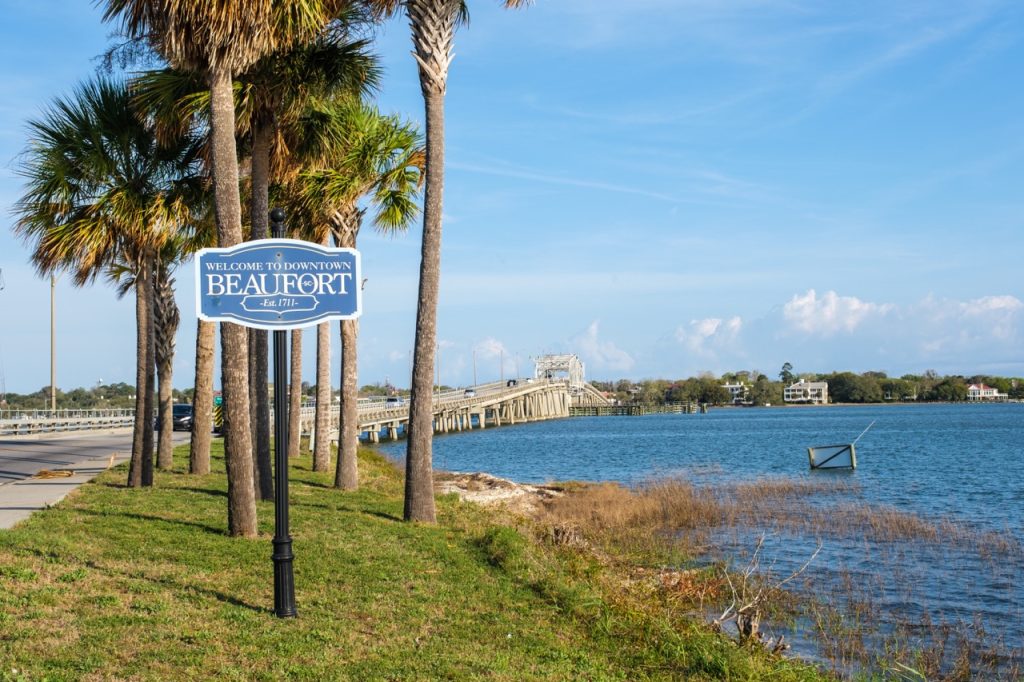
Let’s get the logistics out of the way first, since that’s what most people are actually searching for when they type “day trip from Charleston to Beaufort” into Google.
Charleston to Beaufort is about 70 miles. Plan on roughly an hour and a half in the car, door to door, depending on traffic through the outlying towns. The fastest route runs south on US-17, then cuts over on SC-21 into downtown Beaufort.
That’s an easy, unhurried morning drive, with no flight, no connecting shuttle, and no interstate slog, just marsh grass, low bridges, and pine forest the entire way down.
If you want the full weekend version, leave Charleston on a Friday afternoon. You’ll be checked in and strolling Bay Street before dinner. Weather matters here, too. Our guide to the best time to visit Charleston applies just as well to Beaufort. Both towns share the same subtropical Lowcountry climate. A spring or fall weekend tends to feel far more comfortable than the height of summer.
You don’t have to drive straight through. Two stops make the trip better, not longer.
Edisto Island. Roughly 45 minutes south of Charleston, Edisto Beach sits quiet and mostly undeveloped, especially compared to Charleston’s busier beaches. It’s a slight detour off the direct route to Beaufort. But it’s a rewarding one if you want a beach walk, a bit of shell collecting, or a relaxed seafood lunch. The pace here is noticeably slower than either Charleston or Beaufort. That makes it a nice reset between the two.
Old Sheldon Church Ruins. About 20 miles outside Beaufort, near the small town of Yemassee, brick columns and empty archways rise out of a grove of ancient oak trees. The church was originally built in the 1750s, burned by British forces in 1779, rebuilt decades later, then burned again by General Sherman’s troops in 1865. What remains is genuinely eerie and beautiful at the same time. Admission is free, the stop takes only a few minutes, and it photographs better than almost anything else on this itinerary. Visit Beaufort has more on the ruins’ full history and visiting guidelines.
Here’s our real pitch. A rushed day trip gets you a quick lunch and a short walk around the historic district. An actual weekend gets you the whole town, at a pace that matches its personality.
Beaufort’s historic district still follows the original 1711 town plan, laid out long before the American Revolution. Eighteenth and nineteenth century homes line streets shaded by centuries-old live oaks. The architecture here looks noticeably different from Charleston’s famous rowhouses. These are freestanding Federal and Greek Revival homes, built wide and tall to catch the river breeze in the days before air conditioning existed. If you’re the kind of person who reads our Home & Design coverage for the porches and architectural details alone, Beaufort will hold your attention for an entire afternoon.
Then there’s the film history, which is remarkable for a town this size. More than 100 movies and television productions have been shot here since 1914, according to Visit Beaufort’s own list of filming locations. Forrest Gump crossed Woods Memorial Bridge on foot during one of the film’s most memorable scenes. The Big Chill used the historic Tidalholm mansion as its primary set. G.I. Jane trained along Beaufort’s harbor. You could technically walk past most of these locations in a single afternoon, but you’ll want considerably more time than that to actually savor them.
Start on Bay Street. It runs directly along the water and holds most of the shops, galleries, and restaurants in town. Walk it slowly, and duck into whatever storefront catches your eye.
At the east end, you’ll reach Henry C. Chambers Waterfront Park. It’s a small, well-kept green space right on the river, built in the 1970s as part of a broader downtown revitalization effort. Grab a bench, watch the shrimp boats drift by, and let an hour pass without checking your phone.
From there, wander into the historic district itself. The homes along Craven Street show off the antebellum architecture Beaufort is best known for, with wide porches, tall columns, and generous lots facing the river. None of them look quite like Charleston’s narrow single houses, and that’s exactly the point. This is its own distinct Lowcountry style, shaped by a different history and a different relationship with the water.
Save your second day for the outdoors, since Beaufort’s surrounding islands are just as worthwhile as the town itself.
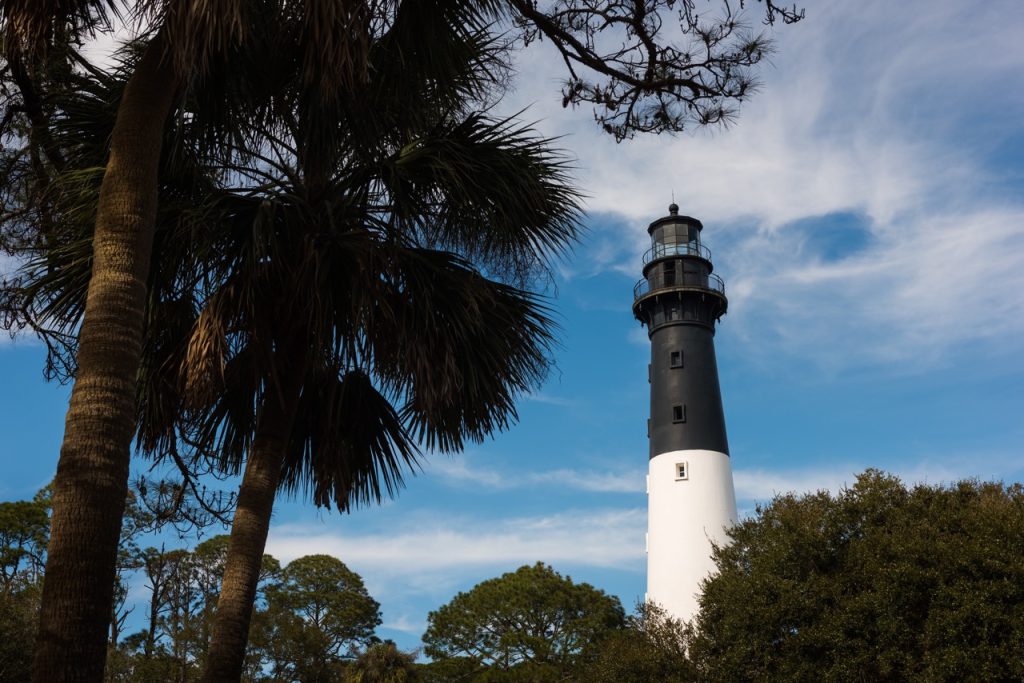
Hunting Island State Park sits about 16 miles east of Beaufort, a quick and scenic drive from downtown. It’s the most visited state park in South Carolina, drawing close to a million visitors every year, and it earns that traffic honestly. Expect five miles of beach, a dense maritime forest, and a saltwater lagoon where dolphins and osprey are regularly spotted. Climb the historic Hunting Island Lighthouse, originally built in 1859 and later relocated more than a mile inland to escape relentless beach erosion. South Carolina Parks has the full details on hours, parking, and seasonal access.
On your way back toward Beaufort, consider a stop in Port Royal. It’s a smaller, quieter town with its own working waterfront. There’s a beach called the Sands at the tip of the peninsula, plus a wooden boardwalk good for crabbing or just sitting still for a while. Check the Town of Port Royal’s park page before you go, since hours shift with the seasons.
A Beaufort weekend pairs easily with other Charleston plans. If you’re already building a longer Lowcountry itinerary, our Travel category has more day trips and getaways worth stacking together. And if this weekend is part of a bigger celebration, our Charleston bachelorette party guide has ideas for the Charleston half of the trip. Use it before or after you head south.
One more thing before you go: don’t skip a proper send-off. Head up to one of the best rooftop bars in Charleston the night before you leave, or the night you get back. Either way, you’ll want the view.
Charleston will always be home base. But Beaufort earns its own weekend. The drive is short, the history is real, and the town moves at a pace Charleston gave up years ago.
Pack a bag. Skip the day-trip version. Give it two days instead of one, and we think you’ll understand why Hollywood keeps coming back.